General Etiquette That Carries Across Most Settings
A handful of habits show up in kava settings across the Pacific, even though the specifics differ by country. Drink your shell or cup in one go rather than sipping it, since kava is meant to be downed, not nursed like a cocktail. Keep a neutral expression even if the taste catches you off guard, visible distaste is considered impolite in most settings. Wait your turn to be served rather than reaching for a cup, and if you're offered a choice of a smaller or larger serving, it's fine to take the smaller one, especially your first time.
Beyond that, the details genuinely differ, which is exactly why we cover each culture separately rather than flattening them into one script.
Fijian Etiquette: The Cobo Clap and Bula
In Fiji, receiving a bilo (the half-coconut-shell cup) follows a specific rhythm: clap once with cupped hands (called a cobo), say "Bula," take the cup, and drink it in one go. Once finished, hand the bilo back and clap again, often three times in more formal settings, sometimes with a "vinaka" (thank you). Elders and higher-ranking guests are typically served first, and the order the cup moves through the group reflects that.
If you're visiting a village, the sevusevu, presenting a gift of kava root to the chief or headman, is the courtesy that formally grants permission to be there, and it's considered the single most important protocol in rural Fiji. Read the full guide: The Fijian Kava Ceremony (Yaqona and Sevusevu) Explained.
Vanuatu Etiquette: Quiet Over Loud
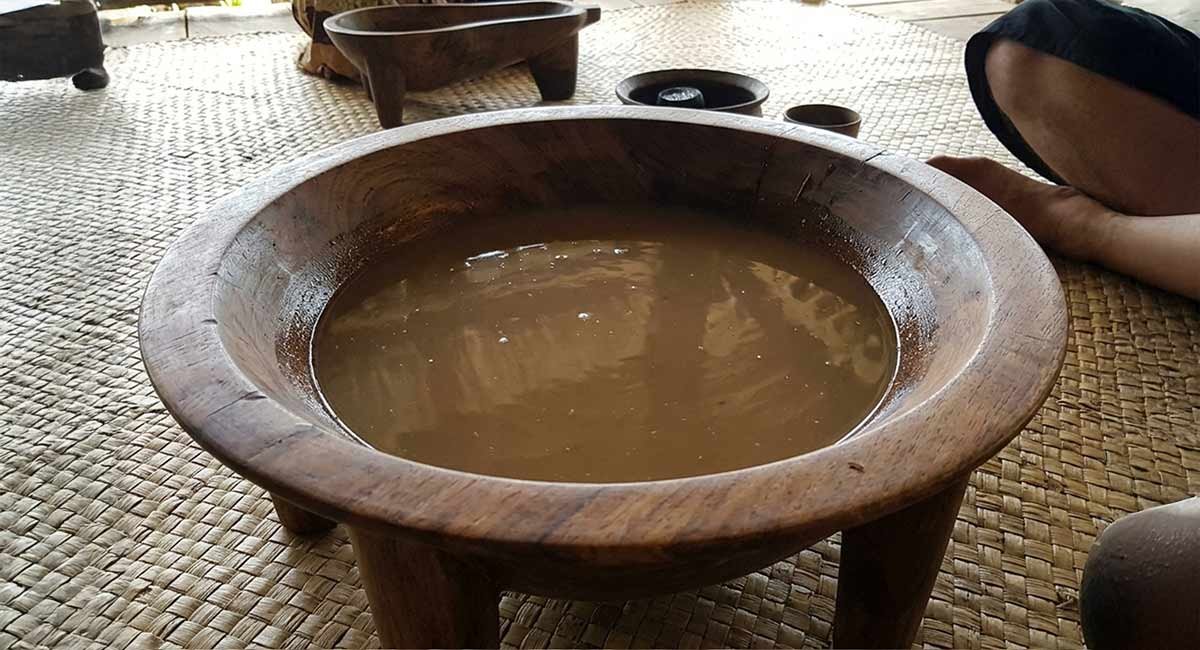
Nakamal etiquette in Vanuatu runs in almost the opposite direction of a Western bar. Conversation stays low, there's no clinking cups or toasting the whole room, and the atmosphere is intentionally subdued, some describe it as closer to meditative than social in the loud sense. The point is to let the kava do what it does, not to compete with it. As with Fiji, the shell is drunk in one go, not sipped.
Read the full guide: The Vanuatu Kava Ceremony and Nakamal Culture Explained.
Tonga and Samoa: Formal Protocol
In Tonga and Samoa, kava (ava in Samoan) has long been tied to chiefly and matai protocol, with formal seating, speech-making, and serving order that differ from Fiji's village-visit custom. These settings tend to be more structured, so if you're a guest, following your host's lead rather than assuming Fijian etiquette applies is the safer approach. Explore: The Tongan Kava Ceremony Explained and The Samoan Ava Ceremony Explained.
At a Modern Kava Bar
Most kava bars outside the Pacific are casual, not formal ceremonies, so strict protocol usually isn't expected. That said, some borrow pieces of Fijian custom, saying "Bula" as a toast is common, and it's worth knowing what you're actually saying when you do. See Kava Clubs and Modern Social Kava Culture for more on how community kava drinking has evolved outside traditional settings.